A brief analysis of wire rope end termination methods for port portal cranes
 Posted:2025-04-16
 Views:21
Port portal cranes are used for loading and unloading operations of general cargo, bulk cargo, containers, etc., in ports. Based on the type of lifting attachment, they are divided into hook mode, grab mode, container spreader mode, and others.
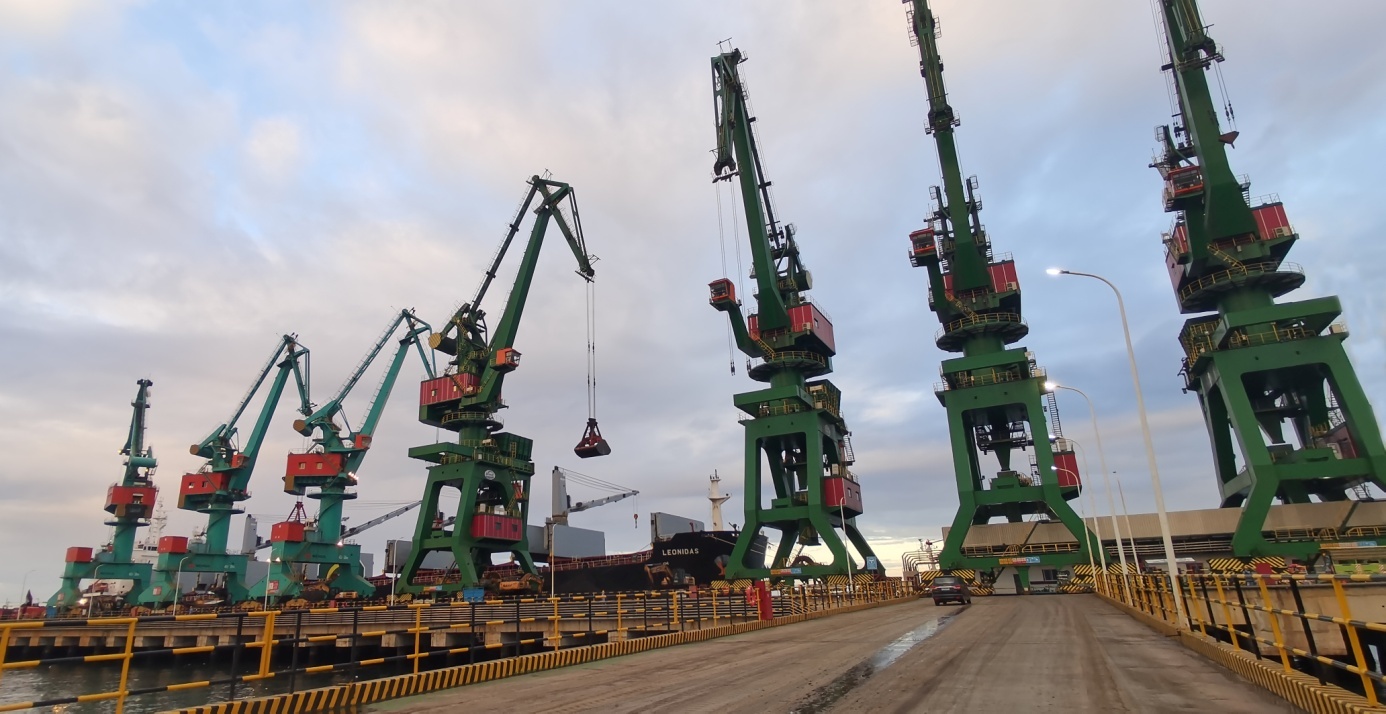
Conventional portal cranes with rigid tie-rod systems in ports use a four-rope system. In grab mode, there are two hoist wire ropes and two closing wire ropes.
The closing wire ropes and the grab wire ropes are connected using ordinary shackles or C-type quick-release shackles. The four most commonly used wire rope end termination methods are as follows.
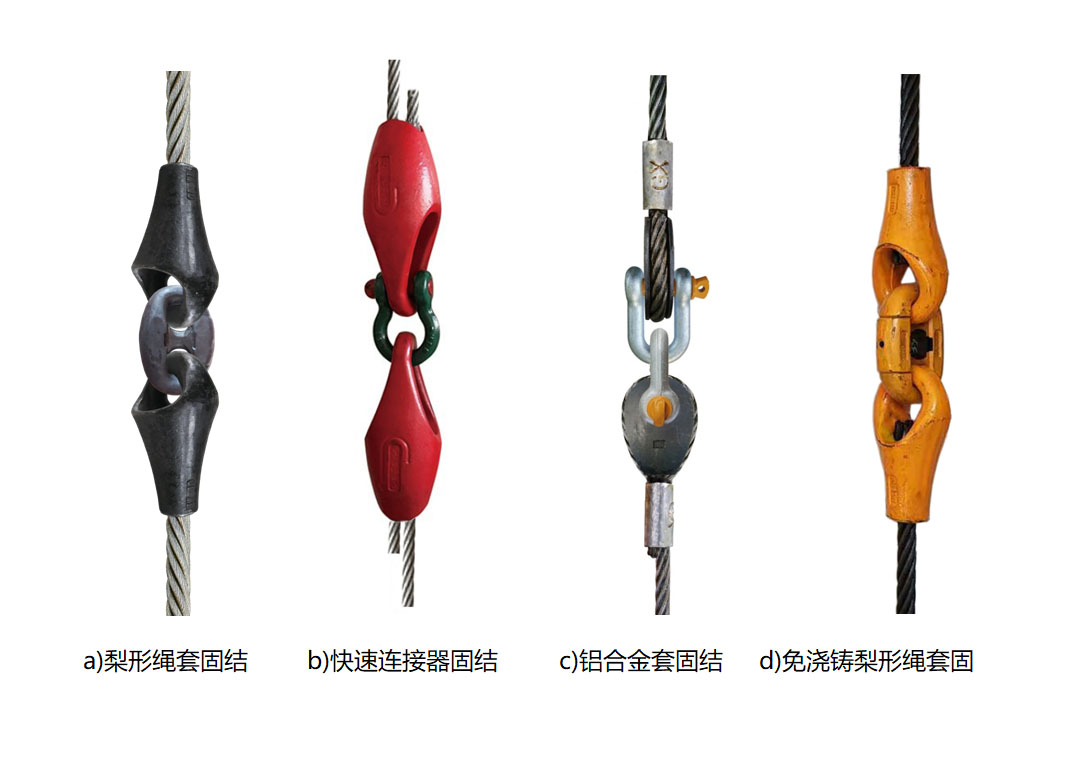
a) Pear-shaped rope socket termination
b) Quick connector termination
c) Aluminum alloy ferrule termination
d) Non-poured pear-shaped rope socket termination
1. Pear-shaped rope socket alloy pouring (casting) termination
The pear-shaped rope socket is fixed to the wire rope by alloy casting, achieving a termination efficiency of 100% of the wire rope's minimum breaking strength.
1)Termination strength: Highest.
2)Economy: High cost, mainly due to the cost of the pear-shaped socket and the alloy.
3)Processing method: Can be processed on site, but the process is complex. After alloy casting, it must be allowed to cool to room temperature before being put into use.
4)Applicability: The wire rope and the pear-shaped socket share the same central axis under load, providing a mechanically sound stress distribution
2. Quick connector termination
The quick connector is a variation of the wedge socket type. It terminates the wire rope through an internal wedge block, achieving a termination efficiency of no less than 75% of the wire rope's minimum breaking strength.
1) Termination strength: Lowest.
2)Economy: Low cost, requiring only the rigging cost of the quick connector itself.
3)Processing method: Can be assembled on site. The installation is simple, convenient, and fast.
4) Applicability: The wire rope and the quick connector are not aligned on the same central axis under load; there is a half-rope-diameter offset, which has a certain impact on the service life of the wire rope. Additionally, the tail end of the wire rope that turns back protrudes from the end of the quick connector opening, making it prone to damage and other safety hazards in the event of unexpected incidents such as scraping against the ship's hold.
3. Aluminum alloy ferrule swaged (pressed) termination
The aluminum alloy ferrule is swaged onto the wire rope using a swaging machine, achieving a termination efficiency of no less than 90% of the wire rope's minimum breaking strength.
1) Termination strength: High.
2) Economy: Lowest cost, requiring only the cost of the thimble, aluminum alloy ferrule, and swaging service.
3)Processing method: Cannot be processed on site; it requires swaging using a swaging machine.
4) Applicability: The wire rope and the thimble are not aligned on the same central axis under load; there is a half-rope-diameter offset, which has a certain impact on the service life of the wire rope. Additionally, the tail end of the wire rope that turns back protrudes from the aluminum alloy ferrule, making it prone to damage and other safety hazards in the event of unexpected incidents such as scraping against the ship's hold.
4. Non-poured pear-shaped rope socket termination
The non-poured pear-shaped rope socket termination method is a new product developed in recent years. It terminates the wire rope through a conical spiral self-locking expansion sleeve inside the pear-shaped socket. Currently, no corresponding standard has been issued, and no definitive termination strength data is available.
1) Termination strength: No relevant standard available yet.
2) Economy: The cost is the highest. The tapered hole of the pear-shaped socket and the tapered spiral self-locking expansion sleeve require high machining precision, resulting in high costs. However, when reused, only the internal tapered spiral self-locking expansion sleeve needs to be replaced.
3)Processing method: Can be assembled on site. The installation is simple, convenient, and fast.
4) Applicability: Currently only applied in small-scale applications; relevant data are still pending evaluation.
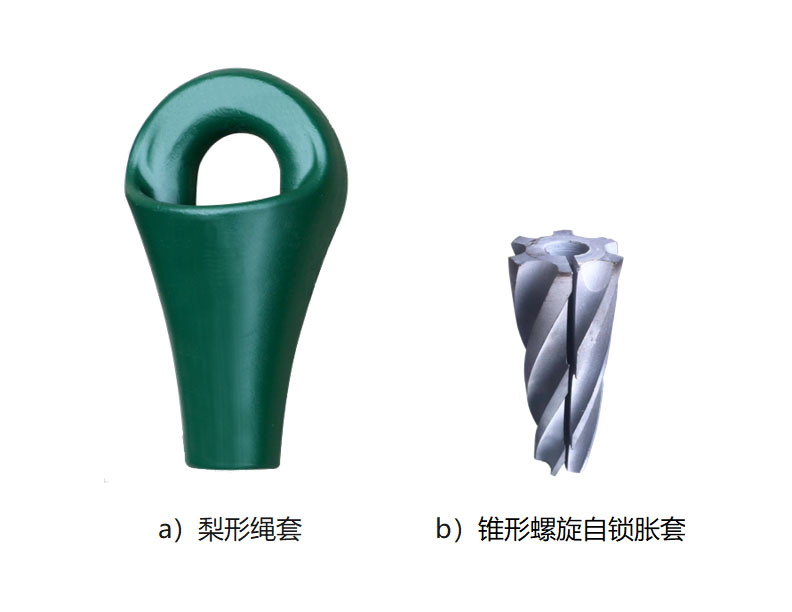
a) Pear-shaped rope socket b) Tapered spiral self-locking expansion sleeve