CN
News Center
40 years dedicated to steel wire ro
News Center

Selection of winter lubrication standards for wire ropes used in port cranes

Posted:2025-02-15

Views:38

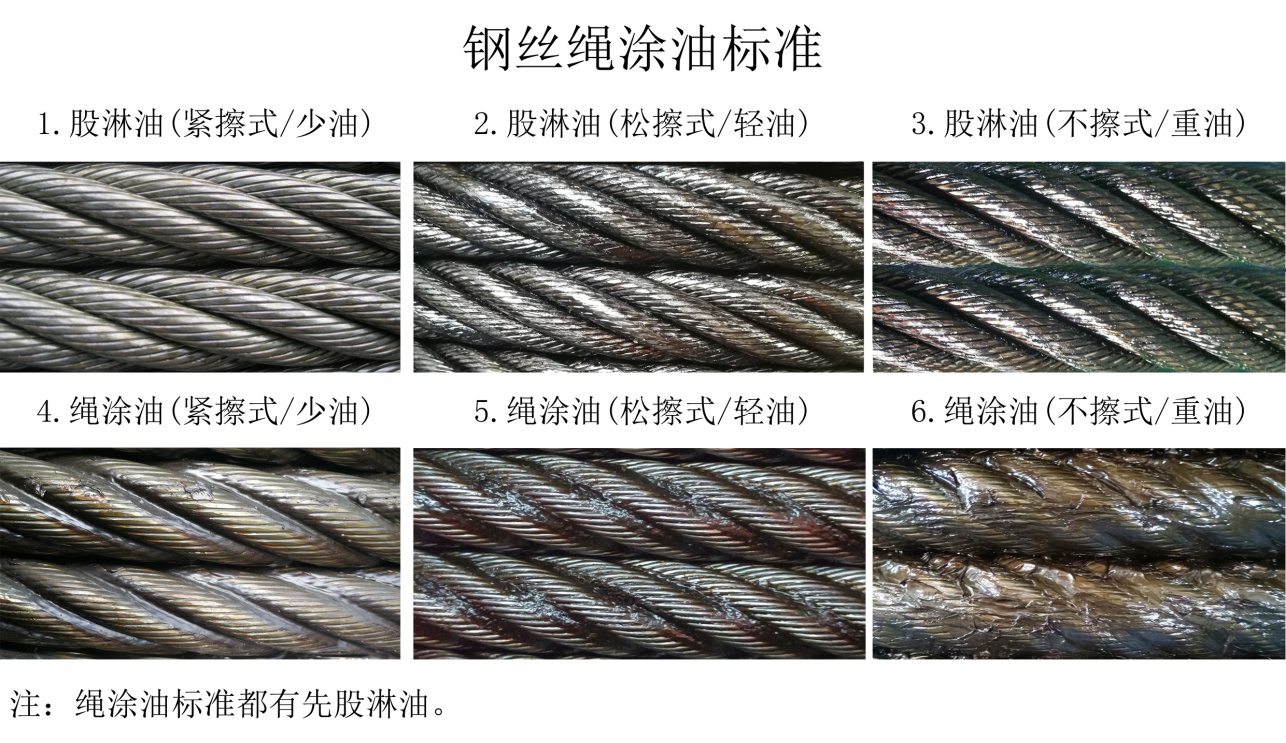
Port cranes mainly refer to quayside container cranes (ship-to-shore cranes), rail-mounted gantry cranes (RMG), rubber-tired gantry cranes (RTG), bridge-type grab ship unloaders, and port portal cranes used in ports. During operation, these cranes rely on wire ropes to load, unload, and transfer containers, bulk cargo, and general cargo. Generally, the lubrication standards applied by wire rope manufacturers during the manufacturing process are divided into two major categories: strand-only oiling or strand oiling plus rope coating, which are further subdivided into six types, as shown in Figure 1.


图1:Classification of conventional lubrication standards for wire ropes


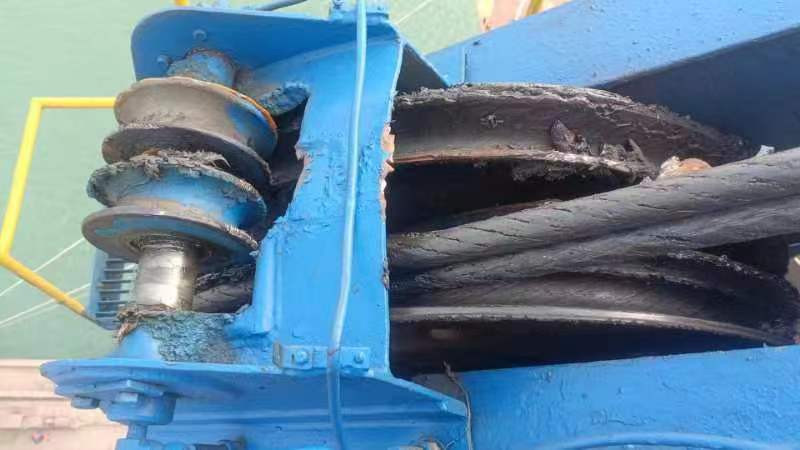
Due to the low temperature in winter, the grease on the surface of the wire rope becomes thicker and its adhesion increases. When selecting wire ropes for port cranes, the amount of lubrication applied to the wire rope should be appropriately reduced. This is especially true for portal cranes and ship unloaders used for bulk cargo operations. When the grab descends into the ship's hold to pick up cargo, the hoist rope is in a slack state. Coupled with strong offshore winds, the hoist rope can easily come into contact with the closing rope. When this happens, the hoist rope may adhere to the closing rope, causing damage such as bending or jumping out of the grooves (Figures 2 and 3).


图2:Jumping out of the groove caused by mutual adhesion of wire ropes


图3:Adhesion between the hoist rope and the closing rope


It is recommended that for port cranes, especially portal cranes and ship unloaders used for bulk cargo operations, when ordering ropes for winter use, for ports with low offshore temperatures and strong winds, the lubrication standards of "Type 2" and "Type 3" shown in Figure 2 should be selected to avoid rope damage such as bending and jumping out of grooves caused by mutual adhesion of wire ropes.

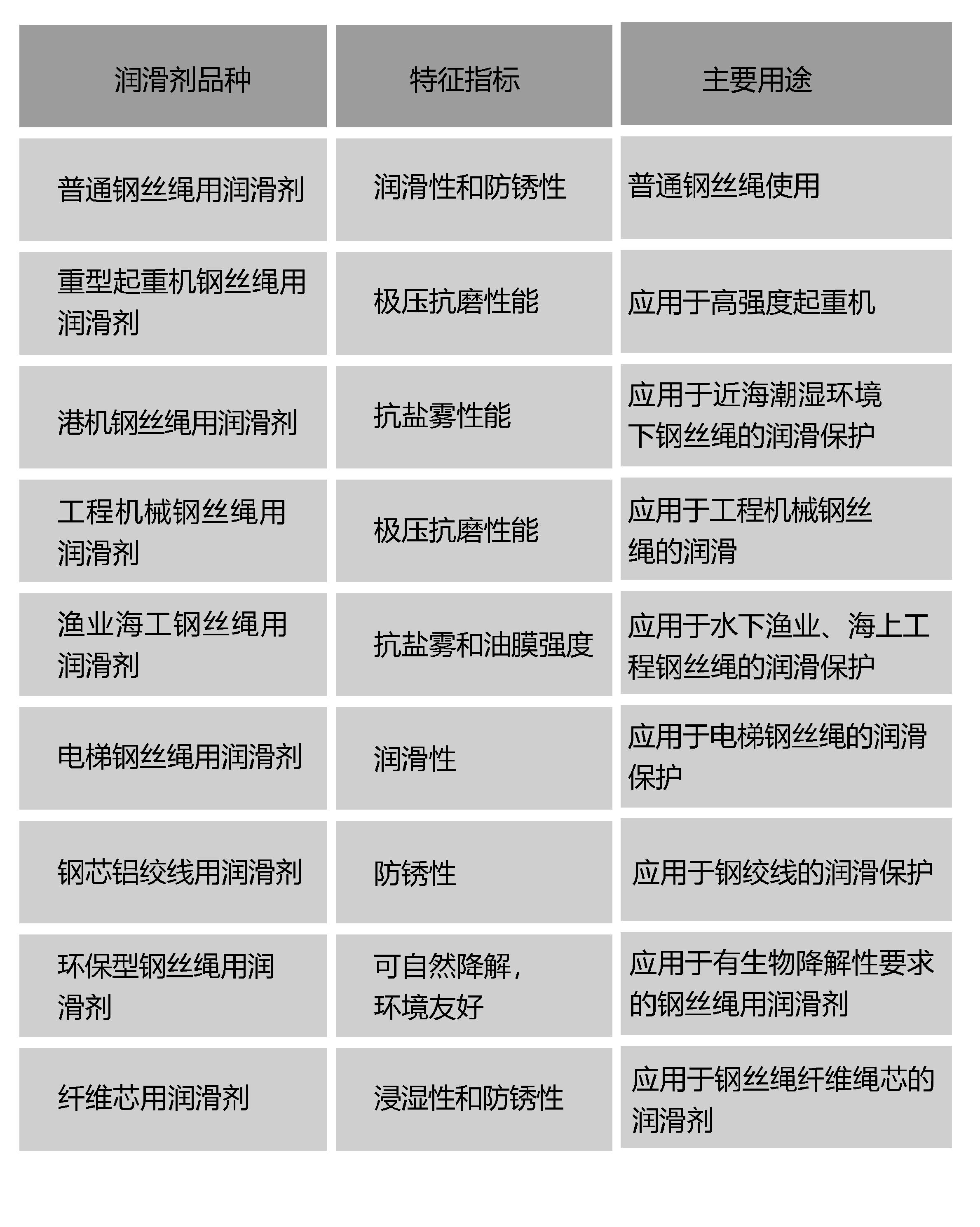
In addition, according to the standard NB/SH/T 0387-2023 "Lubricant for wire rope," lubricants for wire rope manufacturing are classified by application into 9 varieties: lubricant for port machinery wire ropes, lubricant for construction machinery wire ropes, lubricant for fishing and marine engineering wire ropes, lubricant for heavy crane wire ropes, lubricant for elevator wire ropes, lubricant for general-purpose wire ropes, lubricant for steel-cored aluminum stranded wires, environmentally friendly wire rope lubricant, and lubricant for fiber cores (Table 1).


表1:Classification of lubricants for wire rope manufacturing
 

Because wire ropes for port cranes are used in a nearshore humid environment, in addition to conventional properties such as lubricity, rust resistance, and extreme pressure anti-wear performance, an important characteristic of the lubricant used in their manufacturing is that it must have salt spray resistance. Therefore, when ordering wire ropes for port machinery, the intended use as port crane wire ropes should be specified, so that the wire rope manufacturer can apply a lubricant suitable for port machinery wire ropes during production, thereby extending the service life of the wire ropes.